Tools for lighting companies
Draw the room once. The paperwork follows.
Every business gets the pipeline, contracts, client portal, marketing and books. A lighting company also gets the tools below, switched on the day it signs up.
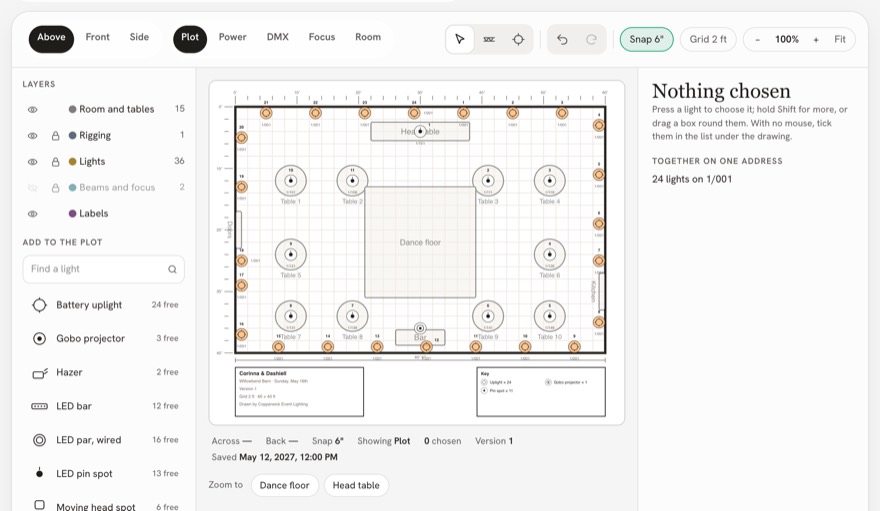
Your lighting plot, drawn to the room.
Draw the room to size, then place each light by its symbol. Uplights round the walls in one go, a pin spot on every table, a row along the truss.
Print it, or save it as a drawing for the venue. Your usual plot is where the next event starts.
The paperwork, worked out from the plot.
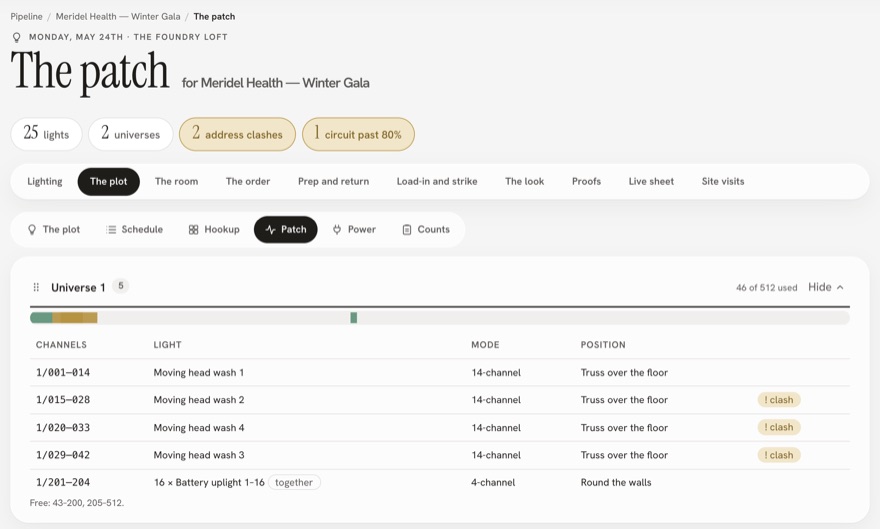
The instrument schedule, channel hookup, patch and power plan all come from the plot, so they always agree with it. Move a light and every sheet follows.
The venue gets a sheet of its own to print, and the schedule comes out as a spreadsheet too.
Power, DMX and batteries, checked before the night.
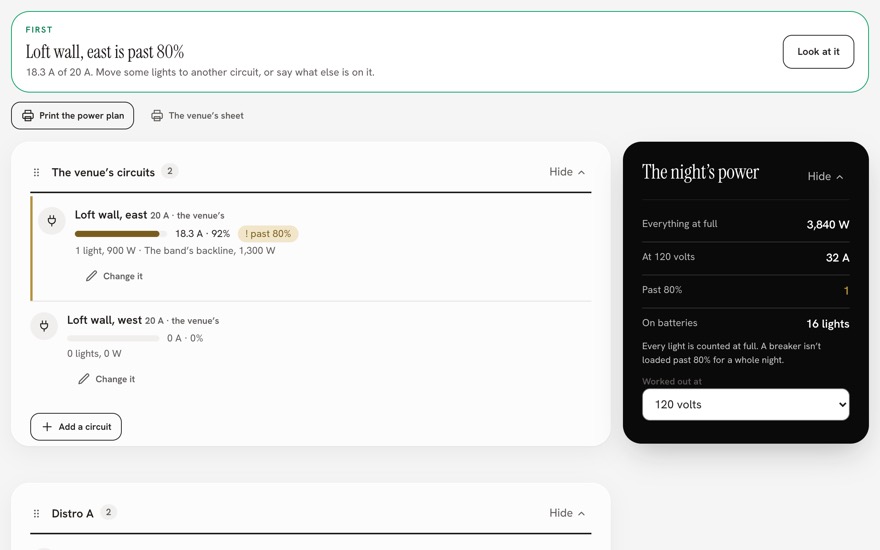
Each circuit is added up against its breaker and flagged in amber past 80%. Two lights on one DMX address are flagged, and so is a battery light that won’t last the night.
The weight on each truss is added up from what you typed. Whether it’s right to hang stays your call and the venue’s. Anything flagged shows up on Today.
Your warehouse, day by day.
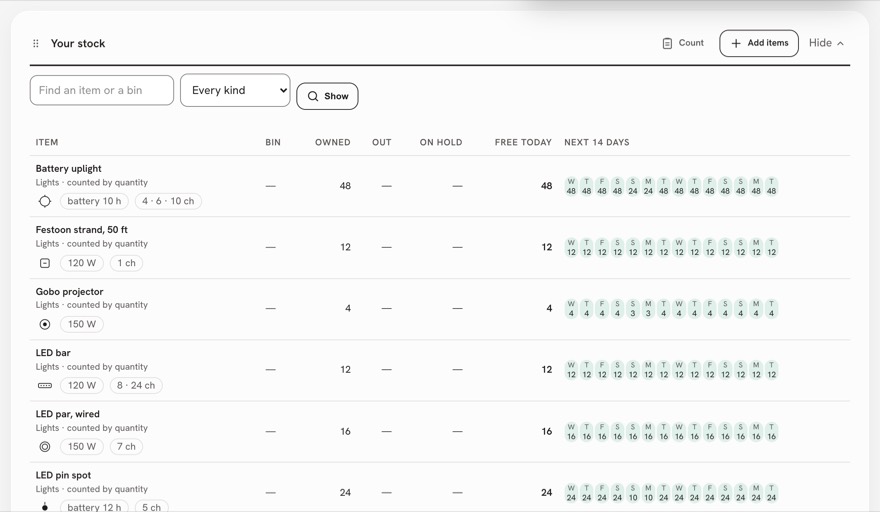
Everything you own, with how many are free each day for the next two weeks. Holds, prep and check-in, the vans, and a sub-rental when you’re short.
The plot’s counts go onto the order, so what gets prepped is what was drawn.
The night, look by look.
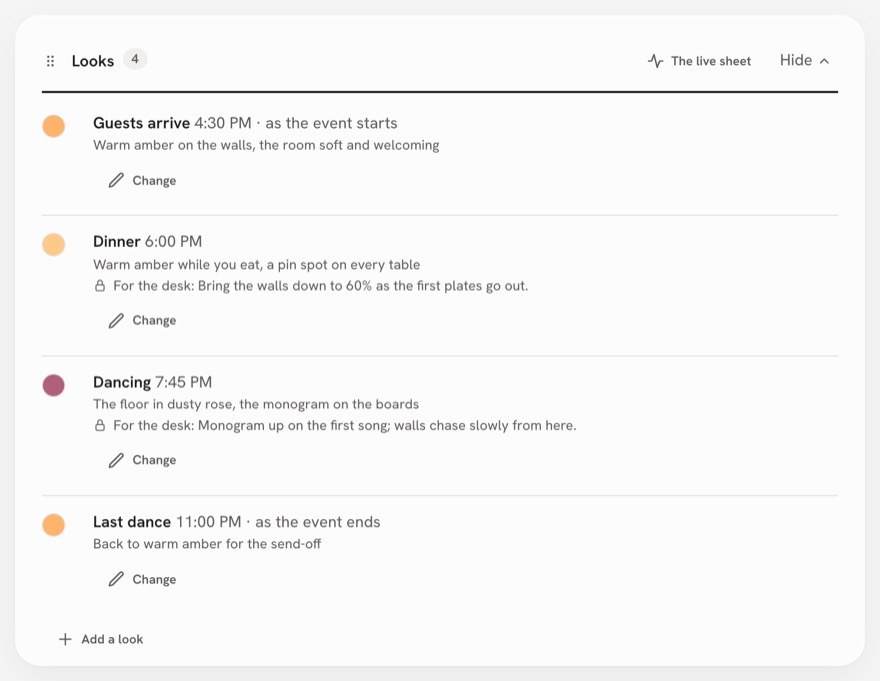
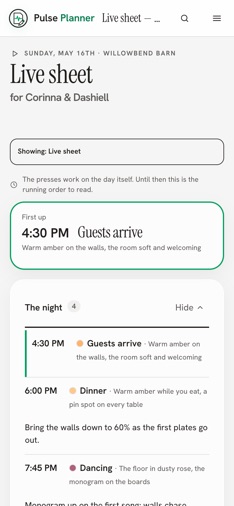
Set a look for each part of the night, with its colours and a note for the desk. On the night they’re the live sheet on your lead’s phone.
Load-in and strike are checked against the venue’s access time and curfew, and the crew get their call times.
Your client sees what you share.
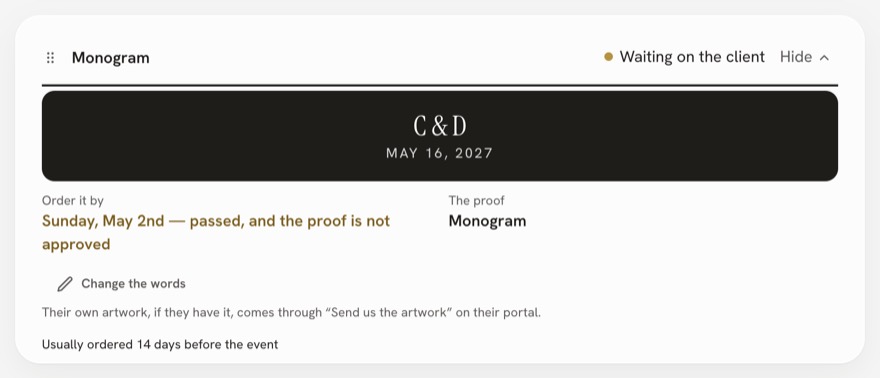
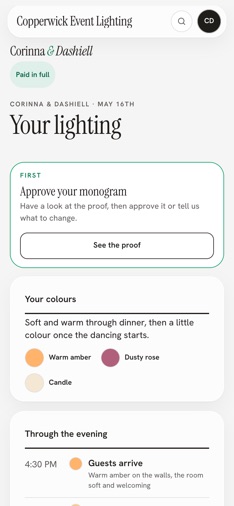
The monogram has its words, its proof and the day it has to be ordered by. Your client approves the proof on their Lighting tab.
Each part of their tab shows only once you share it: their colours, the evening, the proof, the room. Their planner gets a tab to read too.
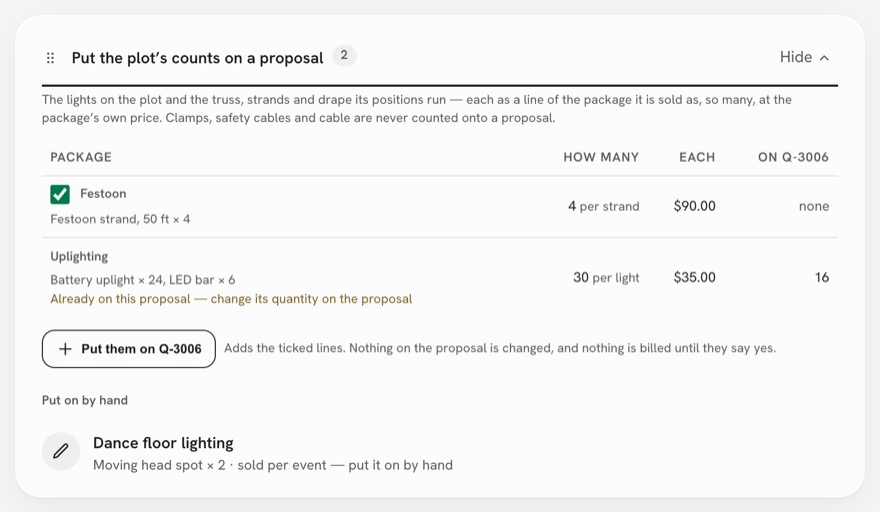
The plot’s counts, on a proposal.
Each light on the plot becomes a line of the package you sell it as, at your own price. You tick the lines that go on.
If the plot needs more than the proposal sells, or more than you have free that day, the proposal page says so in amber before you send it.
Everything else every business gets.
The same pipeline, contracts, portal, marketing and books as every trade, in your own words.
Sales
Inquiries, the pipeline, proposals, contracts and custom forms.
Planning
The plan for each event, the calendar, meetings, and a portal for each client.
Marketing
Social posts, Instagram messages and comments, reviews and campaigns.
Money
Invoices, payments, the books, and paying your team.
See a lighting company in a demo.
Thirty minutes, on a business like yours.